Sierra Leone’s Supreme Court Confronts a Constitutional Breakdown: Amendment Crisis: Ultra Vires Actions, Procedural Breaches, and Fate of the Amendment Bill.
By Israel Ojekeh Parper Snr. 19/09 2026
EXECUTIVE SUMMARY
Sierra Leone’s Supreme Court is now seized with five separate petitions challenging the legality of the Constitution of Sierra Leone (Amendment) Act, 2025. These petitions—filed by the Speaker, the APC, two senior lawyers (Conteh and Kelley), and MP/Lawyer Osman Timbo—collectively allege procedural violations, constitutional breaches, and in one case, fraud in the Gazette publication process.
At the centre of the dispute is Section 108(2)(b) of the 1991 Constitution, which requires a two‑thirds majority (100 votes) for constitutional amendments. The bill reportedly passed with 96 votes, following a controversial ruling by the Speaker that individual clauses could be approved by a simple majority. This triggered walkouts, public outcry, and multiple legal challenges.
The petitions raise four core constitutional questions:
Did Parliament meet the mandatory two‑thirds threshold?
Was the Speaker’s procedural interpretation lawful?
Were the Gazette publications valid and authentic?
Did the President violate Section 106(7) by failing to assent within 14 days?
The most serious allegation comes from Osman Timbo, who claims the Attorney General oversaw a fraudulent second Gazette publication, rendering the entire amendment process void ab initio.
Regionally, similar constitutional crises have occurred in Kenya, Ghana, and Malawi, where courts have struck down amendments for procedural defects. Locally, Sierra Leone’s Supreme Court has historically adopted a strict constructionist approach to constitutional amendment procedures.
The Court is expected to consolidate hearings but issue separate determinations, especially regarding the alleged Gazette fraud.
The outcome will shape Sierra Leone’s constitutional order, electoral system, gender representation framework, and public trust in democratic institutions.
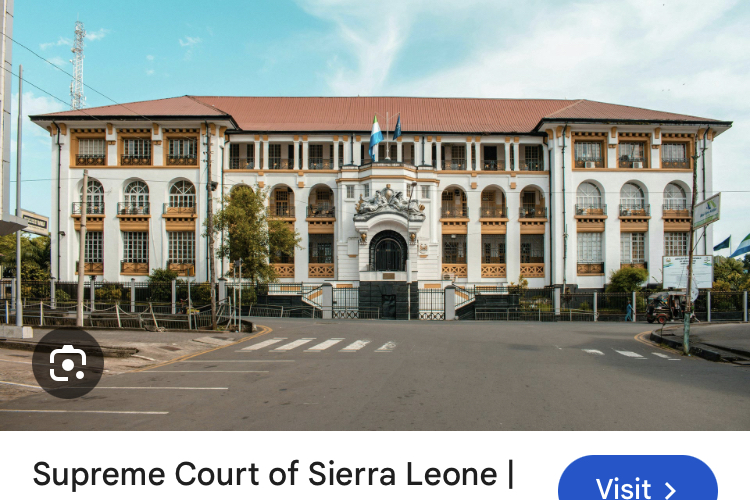
I. Introduction.
A Constitutional Moment of Reckoning
These petitions challenge not only the vote count, Gazette publications, and Speaker’s procedural rulings, but also the President’s delayed assent and the Clerk’s handling of the bill. Together, they expose a multi‑layered breakdown in constitutional discipline.
II. The Five Petitions Before the Supreme Court
1. The Speaker’s Reference (Section 122 Opinion Request)
Nature: A request for the Supreme Court’s advisory opinion under Section 122(1). Core Issue: Speaker Segepoh Solomon Thomas seeks clarification on whether individual clauses of a constitutional amendment may pass by simple majority, even if the final bill requires a two‑thirds majority.
The key constitutional provision is Section 108(2)(b) — which requires “not less than two‑thirds of the Members of Parliament” for constitutional amendments.
Key Legal Questions that arise are: Does Section 108(2)(b) require two‑thirds of all MPs for each clause, or only for the final bill? Can the Speaker’s procedural interpretation override the plain meaning of the Constitution?
Prayer sought: Clarification of the correct voting threshold. Validation or invalidation of the Speaker’s ruling.
Likely Judicial Approach. The Court will apply the literal rule first: “Two‑thirds of the Members of Parliament” means 100 votes out of 149. The Speaker’s interpretation is likely to be tested against the purposive rule, which emphasises constitutional stability and supermajority safeguards.
Regional parallels: In Kenya (2010–2021), courts held that constitutional amendments require strict procedural compliance (BBI case). In Ghana (2019): Supreme Court invalidated an amendment attempt due to procedural defects.
Their core legal claim is that the bill was passed with 96 votes and not the constitutionally required 100. Therefore, the bill is void ab initio because the constitutional amendment procedure was not satisfied. This numerical failure to meet the supermajority threshold renders the bill invalid.
Legal Questions: Was the vote count properly recorded? Does a failure to meet the supermajority threshold automatically invalidate and void the bill? Can Parliament cure such a defect retrospectively?
Prayer. A Declaration that the bill failed to meet the constitutional threshold; and a Declaration that the bill is null and void.
Local precedent: Sierra Leone Supreme Court has historically enforced strict compliance in amendment procedures (e.g., State v. Attorney General, 1994).
Regional parallels: Malawi (2009): Constitutional Court struck down amendments passed without proper quorum.
3. The Conteh & Kelley Petitions (Lawyers’ Society members)
These are individual petitions filed separately, but they arise from the same professional concerns: constitutional compliance/rule of law and procedural integrity. T
Thomas M. Conteh’s Petition focuses on: Procedural defects in the legislative process; challenges to procedural irregularities; the Speaker’s interpretation and the need for strict compliance with amendment procedures.
Kelley’s Petition emphasises: Rule‑of‑law implications, Public trust, constitutional discipline, and the danger of setting a precedent where constitutional amendments are passed without proper supermajority safeguards.
Legal Questions Raised by these two lawyers are: whether procedural irregularities undermine the legitimacy of constitutional amendments. and whether the Court should adopt a strict constructionist approach to amendment procedures.
Prayers: Declaration that the amendment process was constitutionally defective and Orders reinforcing strict procedural compliance for future amendments.
Local jurisprudence: Sierra Leone courts have consistently held that constitutional amendments must follow strict procedural safeguards (e.g., Charles Margai v. AG, 2005).
4. The Osman Timbo Petition (MP & Lawyer)
This is the most explosive of the petitions because it alleges criminal misconduct by the Attorney General and Minister of Justice Alpha Sesay.
Core Allegation: Timbo alleges that the second Gazette publication—required under Section 108(2)—was fraudulent.
He claims that the first Gazette publication was valid. The second publication, required under Section 108(2), was not properly done. Instead, the Attorney General and Minister of Justice, Alpha Sesay, Esq., allegedly oversaw a forged publication of a document purporting to be the second publication. The bill was illegally tabled in parliament, and therefore void ab initio.
Legal Consequence Claimed. If true, the entire amendment process is void ab initio, because a constitutional amendment cannot be tabled without two valid Gazette publications.
A forged Gazette publication would constitute: Fraud, Abuse of office, Violation of constitutional procedure, and Contamination of the legislative process. The Court should order a forensic audit of Gazette logs and printing records.
Legal Questions raised: Was the second Gazette publication authentic? Was it published in accordance with the Government Printing Department’s statutory procedures? Does alleged fraud by the Attorney General invalidate the entire process?
Prayer being sought: A Declaration that the bill was illegally tabled in Parliament; a Declaration that the bill is void ab initio; and a Referral of the matter for criminal investigation.
Lawyer Timbo explains: Click link.
https://www.facebook.com/share/v/1EKywRoo4V/?mibextid=wwXIfr
Regional parallels: Uganda (2018): Constitutional Court invalidated amendments due to procedural fraud and irregularities.
III. Will the Supreme Court Hear the Case Individually or Collectively?All four petitions raise procedural‑legality challenges to the Constitutional Amendment Bill 2025. Although their factual bases differ, they converge on one question: Was the constitutional amendment process conducted in a manner consistent with Sections 106–108 of the 1991 Constitution?
The Supreme Court is therefore likely to treat them as related questions of constitutional procedure, but the prayers sought differ enough that the Court may adopt a consolidated hearing with separate determinations. They may apply one of two options: (a) Consolidate the Hearings because all petitions concern the same bill, the same constitutional provisions, and the same procedural defects. This guarantees efficiency and consistency. (b) Separate Determinations: Even if heard together, the Court may issue separate rulings because the prayers differ, the legal bases differ, and the Timbo allegation involves potential criminality, which must be treated distinctly.
IV. The Speaker’s Ultra Vires Invocation of Section 122 - A Further Examination.

A central defect in the amendment process is the Speaker’s attempt to invoke Section 122 — a constitutional provision that grants no authority whatsoever to the Speaker of Parliament.
1. Section 122 Is Explicit and Exhaustive. Only two offices may refer questions of law to the Supreme Court: The President under Section 122(1) and the Attorney General under Section 122(2). No other actor is mentioned or implied.
2. The Speaker Is Constitutionally Excluded. By attempting to refer a question under Section 122, the Speaker assumed a power the Constitution does not grant him. He also attempted to bypass the Executive and sought judicial validation for his own procedural rulings. He also violated the doctrine of separation of powers and acted ultra vires the Constitution. He cannot “borrow” or “assume” powers simply because he disagrees with parliamentary procedure or anticipates litigation. This is not a grey area but a bright‑line constitutional prohibition.
4. The Purposive Rule of Interpretation Confirms the Exclusion: Section 122 is designed to prevent constitutional crises, allow the Executive to seek clarification on constitutional questions, and avoid judicial entanglement in parliamentary disputes and avoid the politicisation of judicial advisory opinions.
It maintains separation of powers by ensuring Parliament does not use the Court to validate its own internal procedures. Allowing the Speaker to invoke Section 122 would distort the constitutional architecture by referring any procedural dispute to the Court, bypassing the Executive. He could use the Court to validate controversial rulings and transform the Supreme Court into a parliamentary dispute‑resolution body.
5. The Speaker’s Action Amounts to a Functional Constitutional Amendment Without Authority.
6. Regional Jurisprudence Supports the Ultra Vires Finding. Across Africa, courts consistently reject institutional self‑expansion.
Courts in Kenya (BBI Case, 2021) - Courts struck down attempts by parliamentary actors to exercise powers not granted by the Constitution. In Ghana (2019 Amendment Challenge) - Supreme Court invalidated procedural innovations not grounded in constitutional text. In Uganda (2018 Age‑Limit Case), the Court held that parliamentary actors cannot assume powers not expressly granted, and also in Malawi, courts consistently reject institutional self‑expansion of the Constitution.
7. Ethical Dimension - The Speaker’s action reflects a deeper ethical problem: Constitutional power is a public trust, and not a personal entitlement!
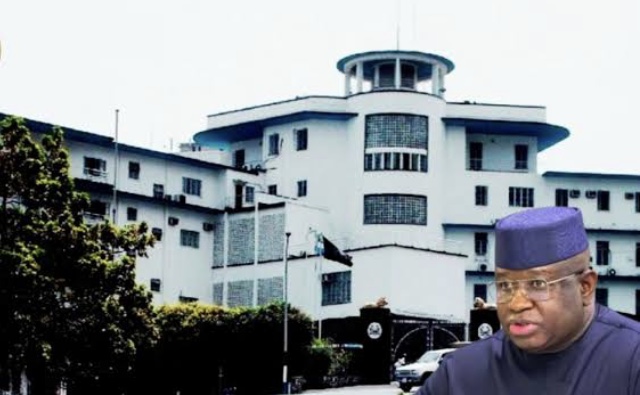 Section 106(7) of the 1991 Constitution states that when a bill is presented to the President.
V. The Presidential Assent Problem: Section 106(7) - Non‑Obvious Insight.
“The President shall signify his assent or otherwise within fourteen days of the presentation of the Bill.”
If the President does not assent within 14 days, the Constitution requires the bill to be returned to Parliament. The President’s delay in signing the bill (now beyond 14 days - The President received it 31 days after 10th August 2026) interacts directly with these petitions. If the Court rules that the bill was not validly passed, then the President’s failure to sign becomes legally irrelevant. If the Court rules that the bill was validly passed, then the President’s delay becomes constitutionally problematic: delay violates Section 106(7), which requires assent within 14 days. This creates a constitutional tension that the Court may need to resolve explicitly. Sierra Leone courts have held that constitutional timelines are mandatory, not discretionary.
This will also affect the remedies the Court may consider. If the Court finds the bill valid, it must address whether the President can still sign it after the 14‑day window or whether the bill must be returned to Parliament. If the Court finds the bill invalid, the President’s delay becomes moot. The bill collapses under Section 108 procedural defects
VI. The 14‑Day Rule Under Section 106(7)

1. What does Section 106(7) actually say?
“The President shall signify his assent or otherwise within fourteen days of the presentation of the Bill.”
Key phrase: “presentation of the Bill” - Not: “passing of the Bill”; “gazetting of the Bill”; “transmission by the Clerk”; “tabling by Parliament”. The Constitution is explicit.
2. When does “presentation” occur?
Presentation = physical or formal delivery to the President.
This is normally done by the Clerk of Parliament, through the Office of the Speaker, via the Cabinet Secretariat. Therefore: The 14‑day clock begins the moment the President receives the bill.
3. Can the Parliamentary Clerk delay presentation? The Answer is "No"!
The Clerk of Parliament has no constitutional discretion to delay. The Clerk is a Civil servant and an administrative officer, not a constitutional actor.
A 31‑day delay is unconstitutional because it undermines Section 106(7). It interferes with the President’s constitutional duty. It alters the amendment timeline. It creates a loophole where Parliament can manipulate assent deadlines. It violates the principle of constitutional certainty. We saw a similar occurrence when the Cyber Crime Act was passed in 2021.
Legal consequence:
The Clerk’s delay may itself be a procedural defect that: Contaminates the amendment process; Strengthens the APC and Lawyers’ petitions; and supports Timbo’s argument that the process was void ab initio.
VII. Likely Supreme Court Approach.
Concise Takeaway
All four petitions raise procedural‑legality challenges to the Amendment Bill. Although their factual bases differ, they converge on one question: Was the constitutional amendment process conducted in a manner consistent with Sections 106–108 of the 1991 Constitution? The Supreme Court is therefore likely to treat them as related questions of constitutional procedure, but the prayers differ enough that the Court may adopt a consolidated hearing with separate determinations.
1. Consolidated Hearing. The Court will likely consolidate the petitions due to overlapping issues.
2. Separate Determinations. Distinct rulings are expected for the Speaker’s interpretation; The APC vote‑count challenge; The Gazette fraud allegation; and the presidential assent delay.
3. Strict Constructionist Interpretation. Based on Sierra Leone’s jurisprudence and regional trends, the Court is likely to adopt a strict interpretation of amendment procedures.
VIII. Implications for Governance and Public Trust

The Court’s ruling will determine whether proportional representation becomes permanent; whether the presidential threshold changes to 50% + 1; whether the 30% gender quota becomes law; whether the Attorney General faces investigation; and whether Parliament must restart the amendment process. This case will shape Sierra Leone’s constitutional future for decades.
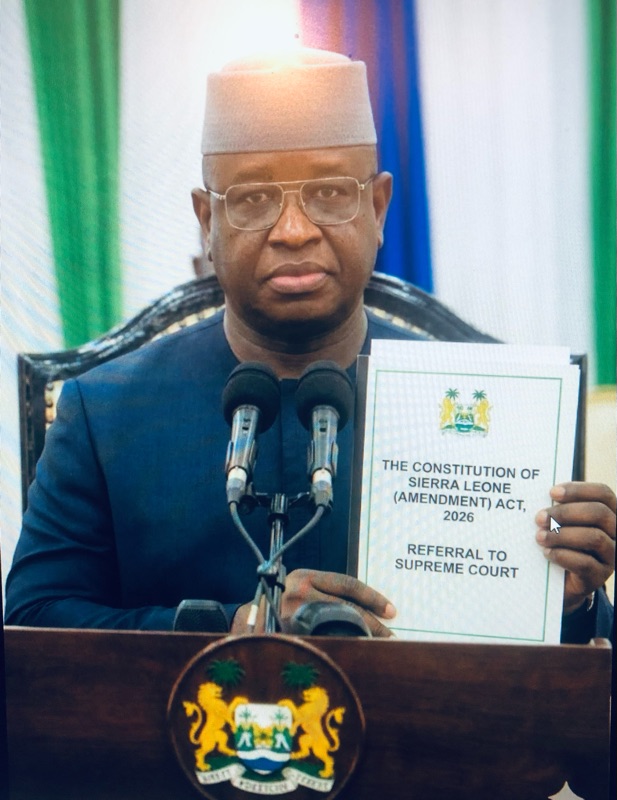 https://www.facebook.com/share/p/1Bt3Gdr7Pd/?mibextid=wwXIfr
IX. CONCLUSION
Constitutional Fidelity as an Ethical Imperative
Sierra Leone now stands at a constitutional crossroads. The controversies surrounding the Amendment Bill are not merely technical disputes over vote counts, Gazette publications, or procedural timelines. They strike at the heart of ethical governance, public trust, and the moral foundations of constitutional democracy.
A Constitution is not simply a legal instrument; it is a social covenant. It binds leaders to restraint, institutions to integrity, and citizens to a shared belief that power is exercised within known, predictable, and lawful boundaries. When constitutional procedures are bent, bypassed, or creatively reinterpreted, the damage is not only legal — it is ethical. It erodes institutions' moral authority and weakens the public’s faith in the fairness of the democratic process.
The Speaker’s ultra vires invocation of Section 122, the Clerk’s unconstitutional delay in presenting the bill, the disputed vote count, and the grave allegation of Gazette fraud collectively reveal a deeper problem: a culture of procedural improvisation that risks normalising constitutional shortcuts. Such shortcuts may appear expedient in the moment, but they corrode the ethical discipline required to sustain democratic legitimacy.
The Supreme Court now carries a solemn responsibility. Its ruling must not only clarify the law — it must reaffirm the ethical duty of all constitutional actors to uphold the letter and spirit of the Constitution. A democracy survives not because its laws are perfect, but because its leaders and institutions choose to obey them faithfully.
Whatever the Court decides, this moment should serve as a national reminder: Constitutional power is a trust, not a possession. Its exercise demands humility, restraint, and unwavering fidelity to due process. Only through such ethical discipline can Sierra Leone strengthen its democratic foundations and preserve the integrity of its constitutional order for generations to come.
X. ANNEXES
Annex A: Key Constitutional Provisions
Section 108(2)(b) — Two‑thirds requirement for constitutional amendments
Section 106(7) — 14‑day presidential assent rule
Section 122(1) — Advisory opinion jurisdiction
Section 105 — Legislative authority of Parliament
Section 108(1) — Gazette publication requirements
Annex B: Regional Case Law Citations
Kenya: David Ndii & Others v. Attorney General (BBI Case, 2021)
Ghana: Abu Ramadan v. Electoral Commission (2019)
Malawi: Chilenga v. Attorney General (2009)
Uganda: Male Mabirizi v. Attorney General (2018)
Annex C: Local Case Law Citations
State v. Attorney General (Sierra Leone, 1994)
Charles Margai v. Attorney General (2005)
SLPP v. AG (2012) — procedural compliance emphasis
Annex D: Timeline of Events
2025: Amendment Bill drafted
2026 (August): Bill tabled
September 4: IGR petition
September 14: Presidential referral
September 15–20: APC, Conteh, Kelley, Timbo petitions filed
September 2026: Supreme Court consolidates hearings
Annex E: Risk Assessment Notes
High risk: Procedural invalidation
Medium risk: Criminal investigation into Gazette fraud
High impact: Electoral system and gender quota reforms
High sensitivity: Public trust and political stability
Annex F: Combined Constitutional Breakdown
The Speaker acted ultra vires; the Clerk violated Section 106(7); Parliament failed to meet the two‑thirds threshold; and Gazette fraud allegations emerged.
Together, these defects create a perfect storm that may compel the Supreme Court to declare the entire amendment process: “null, void, and of no legal effect.”


No comments:
Post a Comment