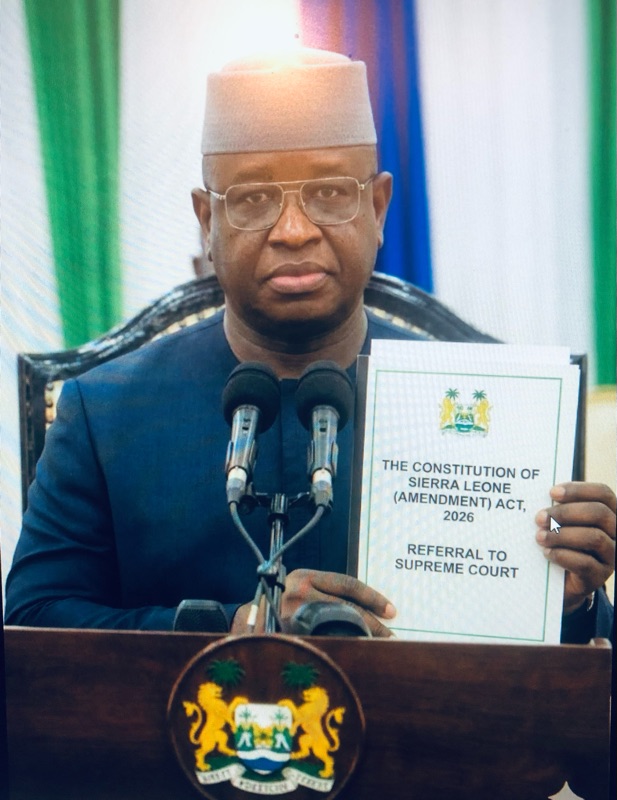
The most critical update in the Sierra Leone Constitutional Amendment crisis since October 16, 2026, is that the Government of Sierra Leone formally moved to have the consolidated legal challenges by the plaintiffs - the opposition APC and others, thrown out, while the Supreme Court banned live broadcasts of the legal proceedings. [1, 2]

The legal standoff centers on whether the Constitution (Amendment) Bill, 2025 was legally passed on August 10, 2026, using a simple parliamentary majority (97 votes) rather than the strict two-thirds majority typically required for constitutional alterations. [1, 2, 3].
The key developments include:
- State Motion to Dismiss (Filed October 16): The Law Officers' Department submitted a formal Notice of Motion. The government argues that the Supreme Court entirely lacks jurisdiction to review internal parliamentary proceedings. They cite Section 94(2) of the 1991 Constitution, asserting that the case violates the separation of powers and is premature because the bill has not yet received presidential assent. [1, 2, 3]
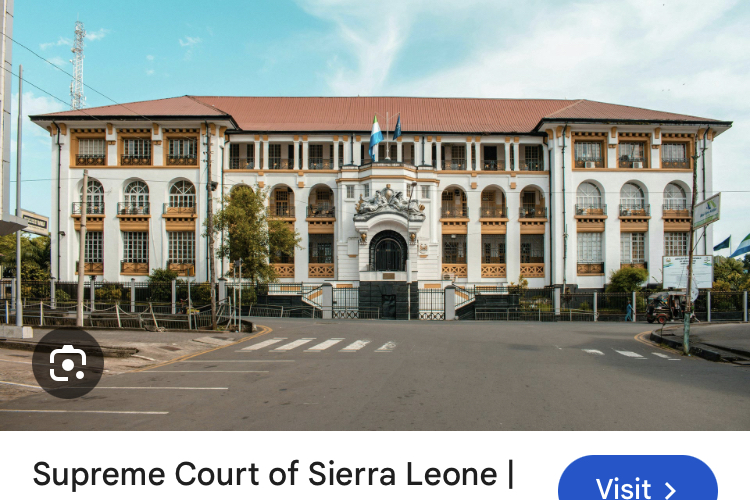
- Media Blackout and In-Chambers Direction Hearing (October 20): Chief Justice Komba Kamanda led an in-chambers direction hearing for the consolidated lawsuits. In a controversial move, the Supreme Court registry issued a public notice banning live media broadcasts and stating that press coverage was not required for this session. The scheduled morning hearing was also delayed and pushed to 2:00 PM that afternoon. [1, 2, 3].
- Parliament Reopened Amid Gridlock (October 16): On the legislative side, lawmakers returned to the Chamber of Parliament at Tower Hill following an official recall directive from President Julius Maada Bio. While intended to handle financial and national development items, the parliamentary atmosphere remains heavily divided over the frozen bill. [1, 2]
The consolidated lawsuits brought forward by opposition figures (including the All People's Congress) and the Lawyers' Society members remain in limbo as the bench decides whether to uphold the government's application for dismissal. [1, 2, 3].
What is the position now since 20th October proceedings? Let us analyse the Ruling by the C J and its implications?
Following the closed-door proceedings on Tuesday, 20 October 2026, the Supreme Court of Sierra Leone struck out the government's motion to dismiss the cases, keeping the landmark constitutional challenge alive. [1]
Chief Justice Komba Kamanda and the five-judge panel rejected the State’s early attempt to shut down the consolidated lawsuits (S.C. 8/2026, 9/2026, and 11/2026). Instead, the court restarted the legal clock and ordered all parties to move forward. [1, 2, 3].
Analysis of the Supreme Court's Ruling & Its Implications.
1. The Government's Shield was Weakened, but Not Destroyed.
The State’s application argued that the court lacked jurisdiction under Section 94(2) because the bill hadn't received presidential assent and parliament's internal voting procedures should be exempt from judicial review. By striking out this motion, the Chief Justice ruled that the court will not pre-emptively dismiss the opposition and Lawyers' Society cases without examining the core legal arguments. However, the CJ left a critical window open: the government is permitted to raise these exact jurisdiction objections again during its formal Statement of Case at the upcoming substantive hearing. [1, 2]
2. Strict Technical Deadlines were Reinstituted.
Rather than allowing the trial to stagnate, the Chief Justice restarted the clock on compliance periods, effective 20 October 2026. The Attorney-General was given a strict 24-hour window from the ruling to serve the official Reference to the plaintiffs' solicitors and the amicus curiae (friends of the court). The CJ explicitly warned that any party failing to meet these renewed timelines would face immediate default proceedings. This signals the judiciary's intent to fast-track a crisis that is paralyzing the political landscape ahead of the 2028 elections. [1, 2].
3. Political Stakes Remain Sky-High.
Because the ruling is procedural rather than substantive, the court has still not decided if the Bill was passed lawfully with 97 votes instead of the 100-vote threshold (two-thirds of the 149 MPs). With the bill proposing highly controversial reforms—such as lowering the presidential first-round victory threshold from 55% to 50% plus one—the judiciary in my view is treading carefully, effectively forcing both sides to lay bare their full constitutional text interpretations in open court. [1, 2].
Date for the Next Sitting
The Supreme Court has not yet fixed an exact public date for the next oral arguments.
Because the Chief Justice ordered the immediate restart of filing timelines starting 20 October, the next phase relies on the plaintiffs and defendants exchanging their formal Statements of Case over the next couple of weeks. Once these documents are submitted under the court's strict compliance warning, the registry will schedule the definitive substantive hearing. [1].
Let us examine the specific arguments, the Lawyers' Society members and the APC opposition party are using to counter the Speaker's simple-majority ruling, and also, consider a breakdown of how the proposed threshold changes alter the 2028 election dynamics? [1, 2]. This ongoing legal and political battle over the Constitution (Amendment) Bill, 2025 represents the most critical test of Sierra Leone’s democratic framework since the end of the civil war.
The legal arguments presented by the opposition and the legal community, combined with the structural impact of these changes on the 2028 elections, shape the current crisis as detailed below.
1. The Lawyers’ Society Stance: Preserving Constitutional Integrity.
The Lawyers' Society approaches the crisis from a strictly rule-of-law perspective, arguing that the government's legislative shortcuts threaten the fabric of the state's legal framework.
- The Two-Thirds Safeguard: The primary legal argument is that any substantive decision regarding a constitutional alteration must strictly adhere to the two-thirds majority requirement set out in the 1991 Constitution. They argue that allowing individual clauses or committee-stage votes to be decided by a simple majority bypasses essential democratic checks and balances. [1].
- Procedural Violations (The Gazette Requirement): Beyond the parliamentary vote count, legal challenges—including those supported by opposition lawmakers like Hon. Osman Timbo—allege explicit procedural failures. They argue the Bill was not legally published in two consecutive issues of the government Gazette before being introduced, which is a mandatory prerequisite for any constitutional amendment. [1].
- Separation of Powers: The Lawyers’ Society strongly rejects the State’s claim that Parliament's internal affairs are completely immune to judicial review. They argue the Supreme Court has an absolute duty to intervene when Parliament acts ultra vires (beyond its legal authority) by violating the very constitution that gives it the power to legislate.
2. The All People’s Congress (APC) Stance: Opposing a "Legislative Coup".
For the main opposition party, the APC, the amendment bill is viewed as a calculated, partisan attempt by the ruling Sierra Leone People's Party (SLPP) to solidify power. [1]
- Resistance to Simple-Majority Rule: The APC staging a walkout during the August 2026 proceedings was an effort to deny legitimacy to the bill. The party maintains that the SLPP explicitly weaponised a 97-vote simple majority to force through alterations that fundamentally require 100 votes (two-thirds of the 149-seat parliament). [1].
- Electoral System Backsliding: The APC strongly opposes the shifting of boundaries and the proposed wholesale transition to a Proportional Representation (PR) system under conditions they deem illegal while court proceedings are still active. [1, 2].
- Defense of Democratic Space: The APC successfully fought against a provision in the early drafts of the bill that would have entirely barred independent candidates from contesting the presidency. While they managed to strike down that specific clause, they argue the remaining un-vetted clauses represent an existential threat to multi-party democracy. [1].
3. Effect on the 2028 Election Dynamics
If the Supreme Court ultimately rules in favor of the government and allows the amendments to stand, the political landscape for the 2028 general elections will change entirely.
| Proposed Amendment | Current System | Strategic Dynamic for 2028 |
|---|---|---|
| Presidential Threshold | 55% of valid votes required to win in the first round. | 50% plus one vote required for a first-round victory. |
| Run-off Probability | High. Forces major parties to build broad national coalitions to cross 55%. | Low. The ruling SLPP can secure a first-round victory solely by consolidating its regional strongholds, bypassing the need for cross-regional consensus. |
| Third-Party Influence | Significant. Smaller parties act as vital "kingmakers" in an inevitable second round. | Diminished. Third parties lose their political leverage if a major party can cross the lower 50% finish line immediately. |
| Electoral System | Standard constituency-based voting. | Shift towards a institutionalized Proportional Representation (PR) framework. |
The Core Strategic Shift
Under the current 55% rule, winning an election in Sierra Leone requires nationwide appeal and post-election coalition-building. Lowering the bar to 50% plus one fundamentally changes the math. [1].
The ruling SLPP knows that its traditional voter bases, when highly mobilized, can comfortably hover around the 50% mark. By lowering the threshold, the ruling SLPP party effectively eliminates the risk of a unpredictable second-round run-off election, where opposition forces traditionally unite against the incumbent. Conversely, the APC faces a much steeper uphill battle; they can no longer rely on forcing a run-off to gather third-party backing and must instead find a way to win an outright majority in a single round.
To fully synthesize the constitutional crisis of 2026, it is necessary to examine both its statutory origins and its historical judicial context. The following analysis merges the precedent-setting mechanics of the Public Elections Act of 2022 with the Supreme Court’s historical jurisprudence on parliamentary sovereignty, utilizing a semi-academic framework grounded in constitutional law and political ethics.
Part I: The Statutory Genesis – The Public Elections Act 2022
The road to the 2026 crisis was paved by the passage of the Public Elections Act, 2022 under Dr. Abass Bundu’s speakership. This piece of legislation serves as the ultimate case study in "de-constitutionalisation"—the practice of using ordinary statutes to reshape constitutional realities.
1. The Proportional Representation (PR) Backdoor
Section 38A of the 1991 Constitution permits the use of a Proportional Representation (District Top-Up) system, but only when the President determines that existing constituencies have not been reasonably established for an election.
Instead of waiting for such an exceptional executive determination, the Public Elections Act 2022 sought to permanently codify and institutionalize the PR framework for local and parliamentary elections. The opposition argued this structural shift altered the foundational representative character of Parliament, implicitly amending Section 38 of the Constitution. However, the parliamentary leadership ruled that because the amendment was housed within an ordinary statutory Act, it required only a simple majority to pass.
2. The Ethical Dilemma of "Substantive Circumvention"
From an ethical perspective, this technique violates the Doctrine of Constitutionalism, which dictates that a constitution must be a rigid, predictable document shielded from transient political majorities.
[Constitutional Ideal]
Constitutional Amendment ──> Requires Supermajority (2/3rd) ──> Achieves National Consensus.
[The 2022–2026 Practice]
Constitutional Substance ──> Packaged as Ordinary Act ──> Passed by Simple Majority ──> Partisan Dominance.
By hiding constitutional changes inside ordinary legislation, the ruling SLPP engaged in what legal scholars term a "fraud on the Constitution." It allowed the government to accomplish by a simple majority what the framers explicitly intended to protect with a strict two-thirds lock.
Part II: Historical Jurisprudence – The Supreme Court as Arbitrator
The 2026 consolidated lawsuits (S.C. 8/2026, 9/2026, and 11/2026) do not exist in a judicial vacuum. The current bench, led by Chief Justice Komba Kamanda, is grappling with conflicting historical precedents regarding where parliamentary independence ends and judicial review begins.
1. The Shield of Non-Intervention: The State v. Tarawallie Framework
The government’s primary defense rests on the traditional common-law doctrine of Parliamentary Privilege and Supremacy, heavily drawing from historical precedents like The State v. Tarawallie. Historically, the Supreme Court of Sierra Leone has maintained a posture of judicial restraint regarding the inner workings of the House, ruling that:
- Under Section 94(2) of the 1991 Constitution, Parliament enjoys the exclusive right to regulate its own internal procedures.
- The court should not peer behind the parliamentary curtain to police how votes are conducted or how bills are debated.
The State relies on this line of authority to argue that the 97-vote count is an internal matter, and that judicial intervention violates the separation of powers.
2. The Spear of Judicial Supremacy: APC v. Attorney General & Electoral Commission (2023)
Conversely, the Lawyers' Society and the APC point to more recent, activist jurisprudence, notably the legal battles leading up to the 2023 elections. In these matters, the Supreme Court clarified that parliamentary autonomy is not absolute.
The court established that while Parliament has the right to manage its own procedures, it must do so within the boundaries set by the Constitution. If Parliament violates a mandatory constitutional condition precedent—such as failing to reach a two-thirds majority under Section 108 or violating Gazette publication timelines—the internal procedure is no longer protected by privilege. It becomes an unconstitutional act, rendering it void ab initio (from the beginning).
Part III: Synthesis of Legal and Ethical Arguments
The intersection of the Public Elections Act 2022 and historical judicial precedents highlights a profound tension between formal legality and democratic legitimacy.
THE CONSTITUTIONAL CROSSROADS (2026)
THE STATE'S POSITION
Formal Legality
Simple Majority (97 Votes) Suffices
Protected Parliamentary Procedure
THEPLAINTIFFS' POSITION
Substantive Constitutionalism
Absolute 2/3 Guardrail (100 Votes)
Judicial Review of Overreach.
1. The Legal Crux: Procedure vs. Substance
The legal crisis hinges on a single question: Is a vote count a matter of procedure or a matter of substance?
- The State argues that how a vote is tallied and declared by the Speaker is a procedural rule of the House, immune to outside interference.
- The Plaintiffs argue that the two-thirds threshold is a substantive constitutional guardrail. Lowering it down to 97 votes transforms Sierra Leone from a constitutional democracy into a system of absolute parliamentary majoritarianism, effectively giving any sitting government the power to rewrite the rules of state governance at will.
2. The Ethical Failure: Reciprocity and the Rule of Law
Ethically, the current crisis represents a breakdown of institutional trust. In political philosophy, the legitimacy of the rule of law relies on the Principle of Reciprocity—the understanding that a ruling party will not alter foundational rules purely to disadvantage its opponents.
By using the legal maneuvers perfected during the 2022 Public Elections Act debates to push through the 2026 amendments, the current parliamentary leadership (the Speaker), has prioritized executive expediency over democratic consensus. If the Supreme Court ultimately legitimises the 97-vote threshold, it will codify a dangerous precedent: that the Constitution is no longer a permanent contract between the state and its citizens, but a flexible tool to be reshaped by whoever holds a simple legislative majority.
To finalise this discussion, I shall examine the comparative constitutional models (such as Ghana or Kenya) that might assist the Sierra Leone's Supreme Court for guidance on this matter?.

Israel Ojekeh Parper Snr.
(Author/Blogger/Publisher)



 Section 106(7) of the 1991 Constitution states that when a bill is presented to the President.