FROM CONSTITUTIONAL REFORM TO CRISIS: SIERRA LEONE’S JOURNEY FROM 1947 TO 1968
A 65th Independence Anniversary Feature Article
By Israel Ojekeh Parper Snr. (Blogger)
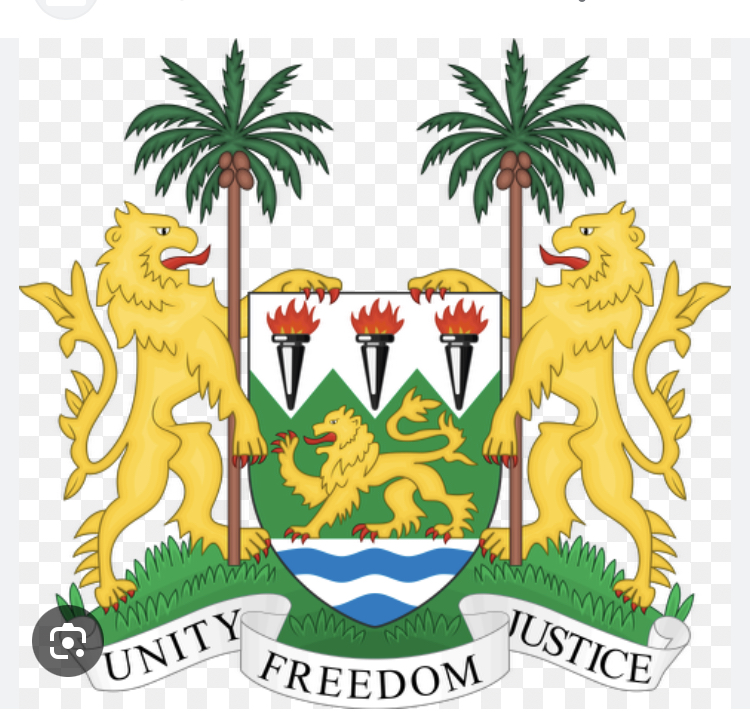
Introduction: A Nation Shaped by Reform, Rivalry, and Resilience
As Sierra Leone marks 65 years of independence, it is important to revisit the long arc of political evolution that carried the country from the constitutional reforms of the late 1940s to the turbulence of the 1967–1968 constitutional crisis. Independence on 27 April 1961 was not an isolated event; it was the culmination of two decades of constitutional engineering, political realignment, and leadership transitions. The story begins not in 1960 at Lancaster House, but in 1947, when a new constitution fundamentally altered the balance of political power in the country.
This article traces that journey — from Governor Stevenson’s reforms, through the rise of the SLPP, the fractures of the 1950s, the independence settlement, and finally the constitutional crisis that brought Siaka Stevens to power in 1968.
1. Governor Stevenson and the 1947 Constitution: The Beginning of Modern Politics
The modern political history of Sierra Leone begins with Governor Hubert Stevenson, whose administration introduced the 1947 Constitution — a transformative document that shifted political power away from the Colony’s Creole elite and toward a more inclusive national structure.
Key features of the 1947 Constitution:
• Expanded African representation in the Legislative Council
•Introduced Protectorate Members, giving chiefs and educated elites a formal political voice
• Reduced the dominance of the Colony’s political class
• Created the conditions for national political parties to emerge
Governor Hubert Stevenson’s reforms were not universally welcomed.
The Creole‑dominated National Council of Sierra Leone (NCSL), led by Dr H C Bankole Bright, opposed the dilution of Colony influence. But the reforms opened the door for Protectorate leaders to participate meaningfully in national politics for the first time.
This constitutional shift laid the foundation for the 1951 elections, the first in which Protectorate representation was substantial. It was the beginning of a new political era.
2. Governor George Beresford‑Stooke and the Rise of the SLPP (1948–1956)
Governor George Beresford‑Stooke inherited Stevenson’s reforms and oversaw their implementation. His tenure saw the emergence of the Sierra Leone People’s Party (SLPP) in 1951 — a broad coalition of Protectorate chiefs, educated elites, and Freetown intellectuals.
Founders and early leaders of the SLPP included:
• Sir Milton Margai, a respected medical doctor
• Rev. Etheldred Jones (Lamina Sankoh), founder of the Freetown People’s Party
• Edward Wilmot Blyden III, grandson of the famed pan‑Africanist
• A network of paramount chiefs and local leaders
The SLPP’s strength lay in its ability to bridge the Colony–Protectorate divide. In the 1951 elections, the SLPP won the majority of Protectorate seats, marking the decline of the NCSL and the rise of a new national political order.
The 1957 Elections: A Turning Point
Under Beresford‑Stooke’s administration, the 1957 elections further entrenched SLPP dominance:
• The NCSL was wiped out
• The United Progressive Party (UPP), led by I. T. A. Wallace‑Johnson and Cyril Rogers‑Wright, emerged as the main opposition
• Internal tensions within the SLPP began to surface
These tensions would soon lead to the first major fracture within the Protectorate political elite.
3. The Breakaway: Stevens and Albert Margai Form the PNP (1958)
By 1958, disagreements within the SLPP over leadership, policy direction, and the pace of decolonisation led Siaka Stevens and Albert Margai to break away and form the People’s National Party (PNP).
Why the split mattered:
• It marked the first major division within the Protectorate elite
• It created a new political axis beyond the Colony–Protectorate divide
• It introduced a more assertive, populist style of politics
Stevens, a former trade unionist and Minister of Mines, Lands and Labour, brought labour and urban support. Albert Margai brought legal expertise and political ambition. Together, they challenged the SLPP’s dominance.
4. The United National Front and the Road to Independence (1960)
As independence negotiations approached, Sir Milton Margai sought to present a united Sierra Leonean delegation. In 1960, he helped form the United National Front (UNF), which included:
• SLPP.; PNP; UPP etc.
• Independent chiefs
• Intellectuals such as Dr. Blyden III
The UNF travelled to London for the Lancaster House Constitutional Conference, where the terms of independence were negotiated.
The official outcome:
• Independence date set for 27 April 1961
• Agreement on fundamental rights, constitutional amendments, and governance structures
• Plan for post‑independence mutual defence cooperation with Britain.
But beneath the surface, unity was fragile.
5. Stevens Refuses to Sign: The Birth of the APC (1960–1961)
At the end of the conference, Siaka Stevens refused to sign the final communiqué, citing:
1. No elections before independence
Stevens had lost his seat in 1957. Without fresh elections, he would be excluded from the independence government.
2. Alleged “secret defence pact”
Stevens claimed the SLPP had agreed to a defence arrangement with Britain that compromised sovereignty.
The official documents mention only a standard Commonwealth defence cooperation clause, but the lack of transparency allowed Stevens to frame it as a secret deal.
The Aftermath:
• Stevens was expelled from the UNF
• He formed the Elections Before Independence Movement (EBIM)
• EBIM evolved into the All People’s Congress (APC) in 1960–61
The APC became the main opposition party, drawing support from trade unions, urban workers, and those who felt excluded from the independence settlement.
6. Independence and the Margai Governments (1961–1967)
Sir Milton Margai (1961–1964)
Sierra Leone became independent on 27 April 1961, with Sir Milton Margai as the first Prime Minister. His government was marked by:
• Stability and moderation
• Strong relations with Britain
• Inclusive governance
• Respect for constitutional norms
Sir Milton’s leadership helped Sierra Leone navigate the early years of independence peacefully. His death in 1964 marked the end of an era.
Sir Albert Margai (1964–1967)
Albert Margai succeeded his brother but adopted a more assertive and centralising style. His tenure saw:
• Rising tensions with the APC
• Accusations of partisanship and attempts to strengthen SLPP dominance
• A politically charged atmosphere leading into the 1967 elections
The stage was set for a constitutional crisis.
7. The 1967 Elections, Coups, and Stevens’ Double Swearing‑In (1967–1968)
The 1967 general elections were fiercely contested. The APC claimed victory, and Siaka Stevens was sworn in as Prime Minister. But within hours, the military intervened. Brigadier David Lansana declared MartialLaw, ordered Sam Ingah Norman to stop the swearing-in of APC Ministers by the Governor General and arrested all of them.
Sequence of events:
1. Stevens sworn in as Prime Minister
2. Military coup removes him immediately
3. National Reformation Council (NRC) takes power
4. Counter‑coup in 1968 restores civilian rule
5. Stevens is sworn in again, becoming Prime Minister for the second time
This period marked the collapse of the independence‑era constitutional order and the beginning of a new political chapter dominated by the APC.
EPILOGUE:
Sierra Leone’s Economic Standing at Independence
The economic excerpts from the period — including statements by Secretary of State Ian Macleod, Governor‑General Sir Maurice Dorman, and Sir Milton Margai — paint a picture of cautious optimism.
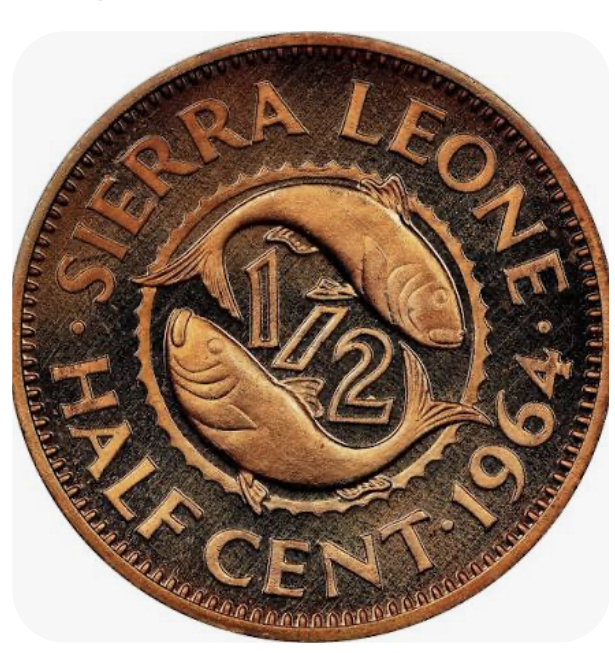
Key economic indicators at independence:
• Revenue had grown significantly from the late colonial period
• Sierra Leone had spent £25 million on development projects in the decade before independence
• Britain had provided:• £3.7 million in loans
• £5 million in grants
• Additional £2 million in post‑independence support
• Sierra Leone had also borrowed £3 million for ongoing development programmes.
Sir Maurice Dorman emphasised that Sierra Leone was not wholly dependent on outside aid, noting that much of the development spending came from local resources.
Sir Milton Margai expressed gratitude for British assistance but stressed Sierra Leone’s commitment to responsible self‑government and economic progress.
The Secretary of State Ian Macleod watched his comments on future continued friendships- “ By signing this Report, I am…registering the birth of independent Sierra Leone on 27th April 1961. This is the great result of our talks. They have been married by friendship and cordiality, while not lacking in frankness and plain speaking. Sierra Leone and Britain have been friends before 150 years. All of us who have taken part in the talks see no reason why as independent states we should not remain close friends for as many years to come …”
The economic foundation at independence was modest but promising — a blend of local effort, British support, and optimism for the future.
VIRTUAL TIMELINE (1947–1968):
1947 - Governor Stevenson introduces the 1947 Constitution
• Expanded African representation; Protectorate Members added
1951 • SLPP formed; wins elections
1957 - SLPP consolidates power. NCSL collapses; UPP emerges
1958 Stevens and Albert Margai form the PNP.
1960 - United National Front formed
Lancaster House Conference
Stevens refuses to sign communiqué
EBIM → APC
27 April 1961 - Sierra Leone becomes independent; Sir Milton Margai becomes Prime Minister
1964 - Sir Milton dies; Sir Albert becomes Prime Minister
1967 - APC claims victory; Siaka Stevens sworn in → coup → NRC rule
1968 - Counter‑coup restores civilian
1971 - Sierra Leone transforms into a Republican constitutional state; but the coups did not stop - the situation
Conclusion:
Carrying the Story Forward.
Sixty‑five years after the green, white and blue was first raised, Sierra Leone’s constitutional story still speaks with remarkable clarity. It reminds us that nations are not born in a single moment, nor shaped by a single leader, but forged through decades of negotiation, disagreement, reform and resilience. From Governor Stevenson’s 1947 constitutional reset, through the rise of the SLPP, the fractures that produced the PNP and APC, the unity and tensions of the Lancaster House delegation, and the turbulence of 1967–1968, Sierra Leone’s early political journey was complex — but it was also purposeful.
Independence did not erase differences; it gave the country the responsibility to manage them. The leaders of that era — The Margai brothers, Siaka Stevens, Rev. E. N Jones (aka Lamina Sankoh), E W Blyden III, Dr Bankole Bright, I T A Wallace‑Johnson, Rogers‑Wright, M S Mustapha, John Karefa Smart, Chief Bai Koblo, Chief Jai Kai Kai, Kamdeh Bureh, and many others — disagreed passionately about the path forward, yet each contributed to the architecture of the modern state. Their debates, alliances and rivalries shaped the institutions we inherited and the political culture we continue to refine.
As the country reflects on 65 years of sovereignty, the lesson is not that our past was perfect, but that it was ours — built through struggle, compromise and determination; yet the struggle continues and shows no sign of abatement. The constitutional story from 1947 to 1968/71 shows a nation learning to govern itself, to correct itself, and to keep moving forward even when the path was uncertain.
Independence is not a destination; it is a responsibility renewed by every generation. And as Sierra Leone looks ahead, the most powerful tribute we can pay to those who carried us to freedom is to continue the work they began: strengthening our institutions, deepening our democracy, and ensuring that the promise of self‑government is felt in every community, in every district, and in every life.
Ali Ganda: Freedom In April 1961
https://youtu.be/e2F0r1-cITk?si=4HbbjliwxrdAHBuO
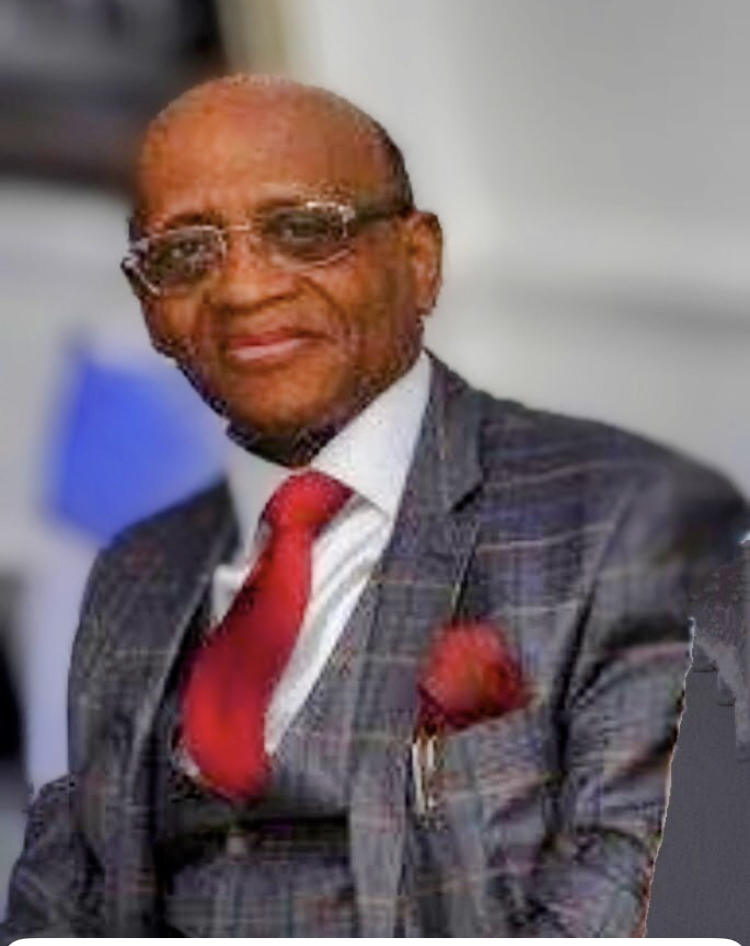
Israel Ojekeh Parper Snr. [Author (c)]

No comments:
Post a Comment